
Through the Lens: High School Dreams, the Rift Valley Road, and the Living Tribes of Southern Ethiopia Series
As a teen in my photography class, I remember running my fingers over photographs of Southern Ethiopia’s tribes: the clay-red hair of the Hamer women, the face paint of the Karo peoples, and the striking clay lip plates of the Mursi. To a teenager holding an analog SLR camera, these images felt like windows into a distant universe. To me these were mythical people living in a land so far away, I never in my wildest imagination dreamed I would one day stand in front of them, let alone with my own family by my side.
Years later, based in Addis Ababa, that distant horizon became our reality.
1. The Tactical Pivot: Addis to Arba Minch & Into the 4WD
We only had 5 days to play with so, to maximise our time with kids and bypass days of gruelling highway transit out of the central highlands, we took the tactical route: a short domestic flight from Addis Ababa directly to Arba Minch, touching down on the floor of the Great Rift Valley between Lake Abaya and Lake Chamo.
From the runway, we loaded into our tour 4WD to begin the true overland expedition. Leaving the town behind, the road immediately shifted our Addis-based rhythm with acacia scrub, roadside stands overflowing with local bananas and mangoes, livestock herders, and the warm breeze rolling through the rift escarpment.
2. High in the Mist: The Dorze of Chencha
Before heading south into the dry river basins, our 4WD wound up into the cool, misty Guge Mountains to visit the Dorze people.
Stepping into a Dorze village feels like entering an architectural safari:
The Living Elephant Huts: Towering up to 12 meters high, their homes are woven entirely from bamboo and dried enset (false banana) leaves, ingeniously constructed to mimic the face and trunk of an elephant—a cultural tribute to the herds that once roamed these ridges. What’s fascinating is that you can see similar huts throughout all of Africa!
The False Banana Feast: We watched village elders scrape the fibrous pulp of enset, ferment it underground, and bake warm, spongy kocho flatbread over an open hearth, dipping it in highland honey and spiced chili paste. I really enjoyed it but I’m not sure how much I love the ouzo-like shots they brewed from fermented banana leaves.
Master Weavers: We had an opportunity to try the wooden foot-treadle looms to weave spun raw cotton into intricate, brightly bordered tibeb shawls. We didn’t do that well but for the kids, seeing how a single plant provides a home, food, and clothing is an unforgettable masterclass in sustainable design. Narturally we purchased some shawls as gifts.
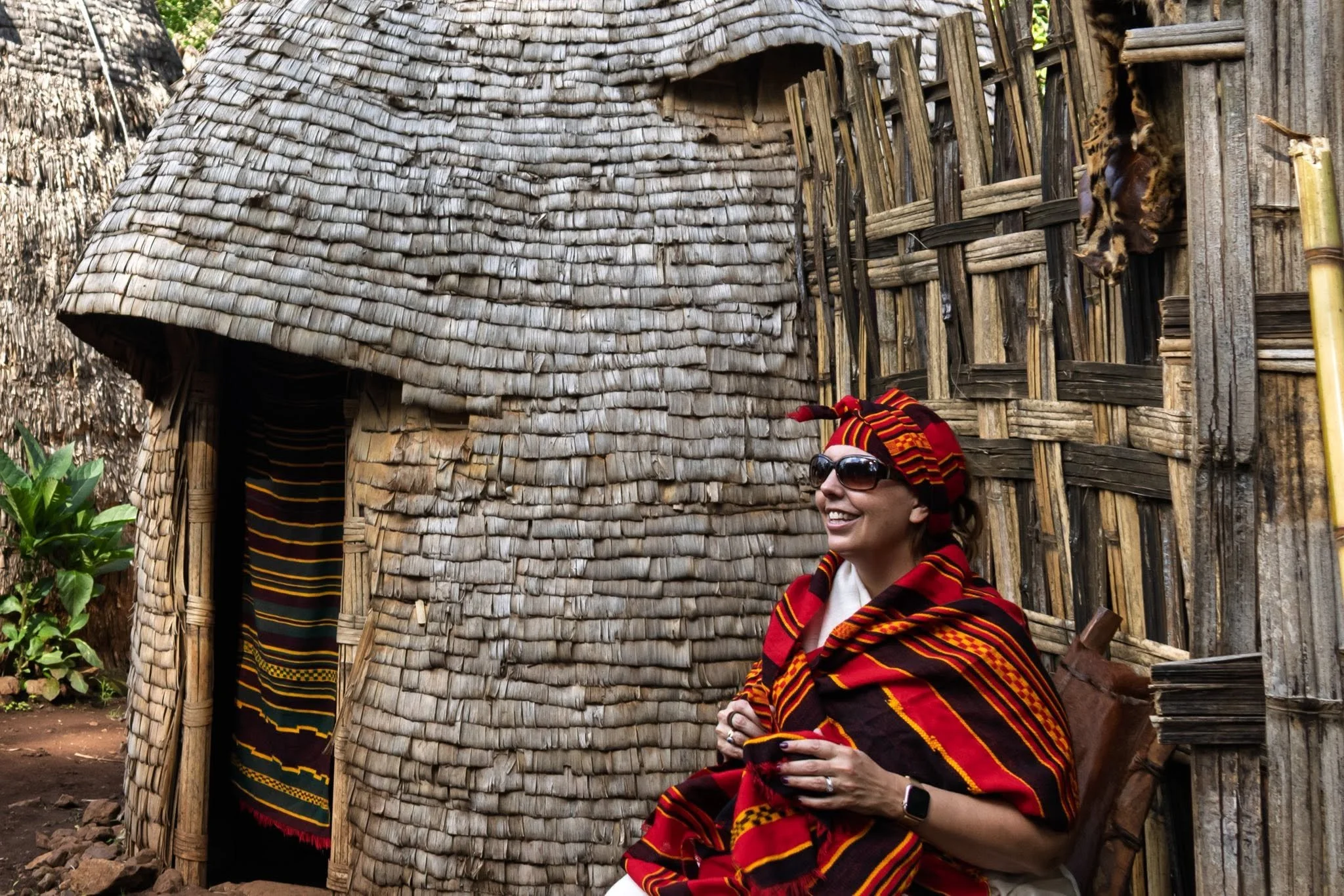
Dressed up in traditional Dorze clothes.
3. Stone Terraces & Fortified Hills: The Konso
Winding south from the mountains brought us into the dry, sculpted valleys of the Konso Cultural Landscape (a UNESCO World Heritage site).
Unlike the pastoralist communities further south, the Konso are legendary stone-masons and agricultural engineers:
Ancient Terraced Hills: For over 400 years, the Konso have hand-built towering stone drywalls along mountain contours to catch scarce rainfall and prevent erosion.
Walled Settlements & Waga Statues: Their dense, fortified hilltop villages feel like living labyrinths, entered through narrow, defensive stone alleyways. We learned about waga, carved wooden memorial statues erected in sacred groves to honor heroic leaders, elders, and warriors.
Rites of Passage: In order to be prepared for marriage, young men must be able to throw a large boulder over their shoulder. It was fascinating to watch them practise and even Archie had a turn… he’s not ready for marriage yet!
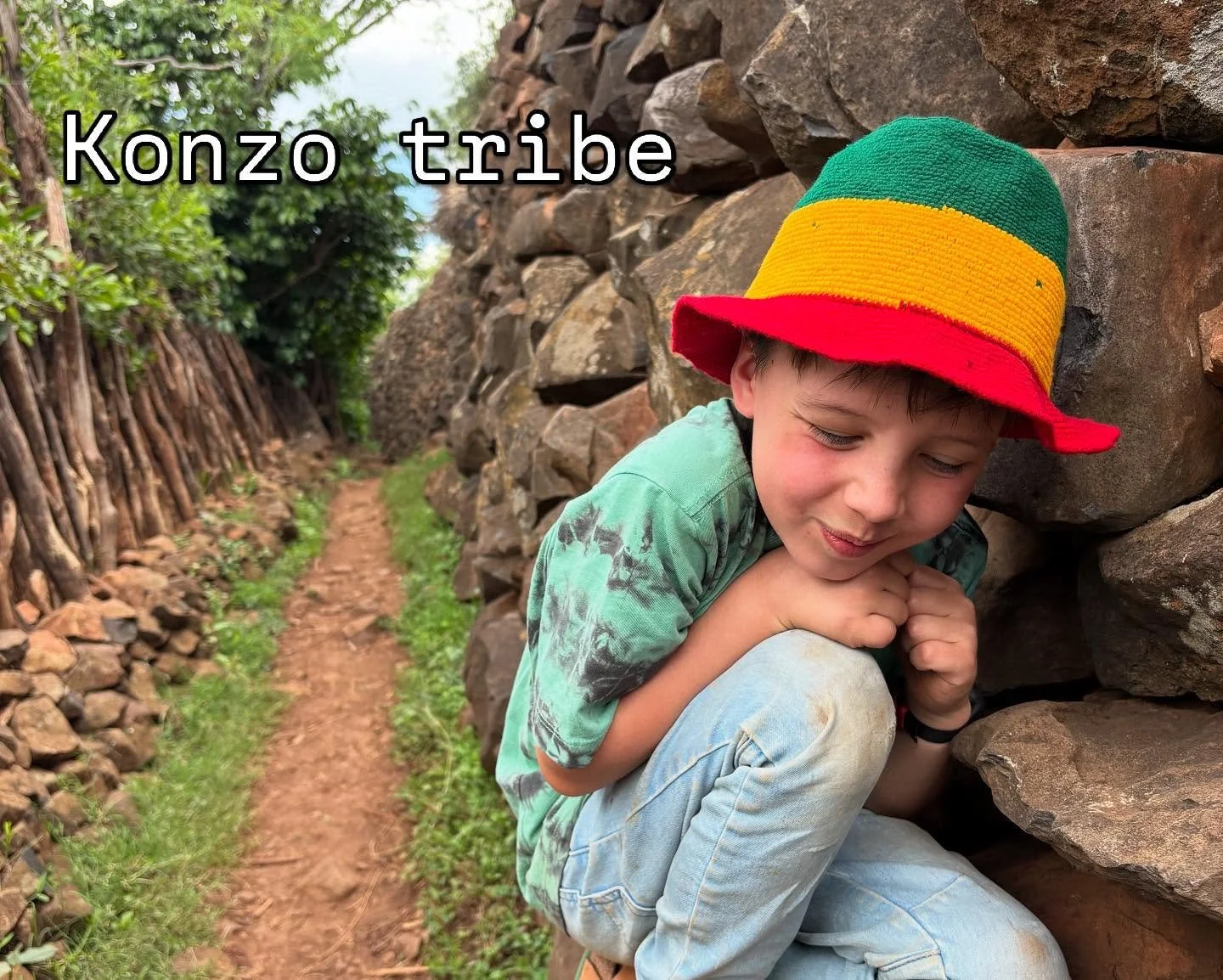
Photography by Robert Love
4. Savannah Stilt Walkers: Encountering the Banna
As the terrain flattened into golden, sun-bleached bushland, we caught sight of one of the Omo Valley's most surreal spectacles: the young boys and shepherds of the Banna tribe perched high on wooden stilts.
Air-Walking Traditions: Balancing effortlessly several feet off the ground on stripped wooden poles, young Banna boys navigate tall grass and thorn scrub—a traditional skill rooted in spotting livestock, avoiding snakes, and demonstrating agility and balance during rites of passage. I’m still wondering how the heck they got up there!
Kid-to-Kid Connection: For our children, seeing boys their own age walking casually on stilts sparked instant awe, laughter, and curiosity across language barriers.
5. Chalk Artistry on the Omo River: The Karo (Kara)
Pushing deeper toward the banks of the winding Omo River brought us to the Karo people, the smallest ethnic group in the valley, residing in villages high on the bluffs overlooking the water.
Living Canvases: The Karo are celebrated masters of body and face art. Using natural pigments of white chalk, yellow mineral rock, black charcoal, and red iron ore, they paint intricate, geometric patterns and animal prints across their skin.
Aesthetic Expression: Far from being purely decorative, these painted motifs celebrate identity, beauty, and status within the community. Standing on the cliff edge with the sweeping river below and the chalk-painted villagers looking out over the valley felt like stepping inside an artistic masterwork. We got to be painted as well!
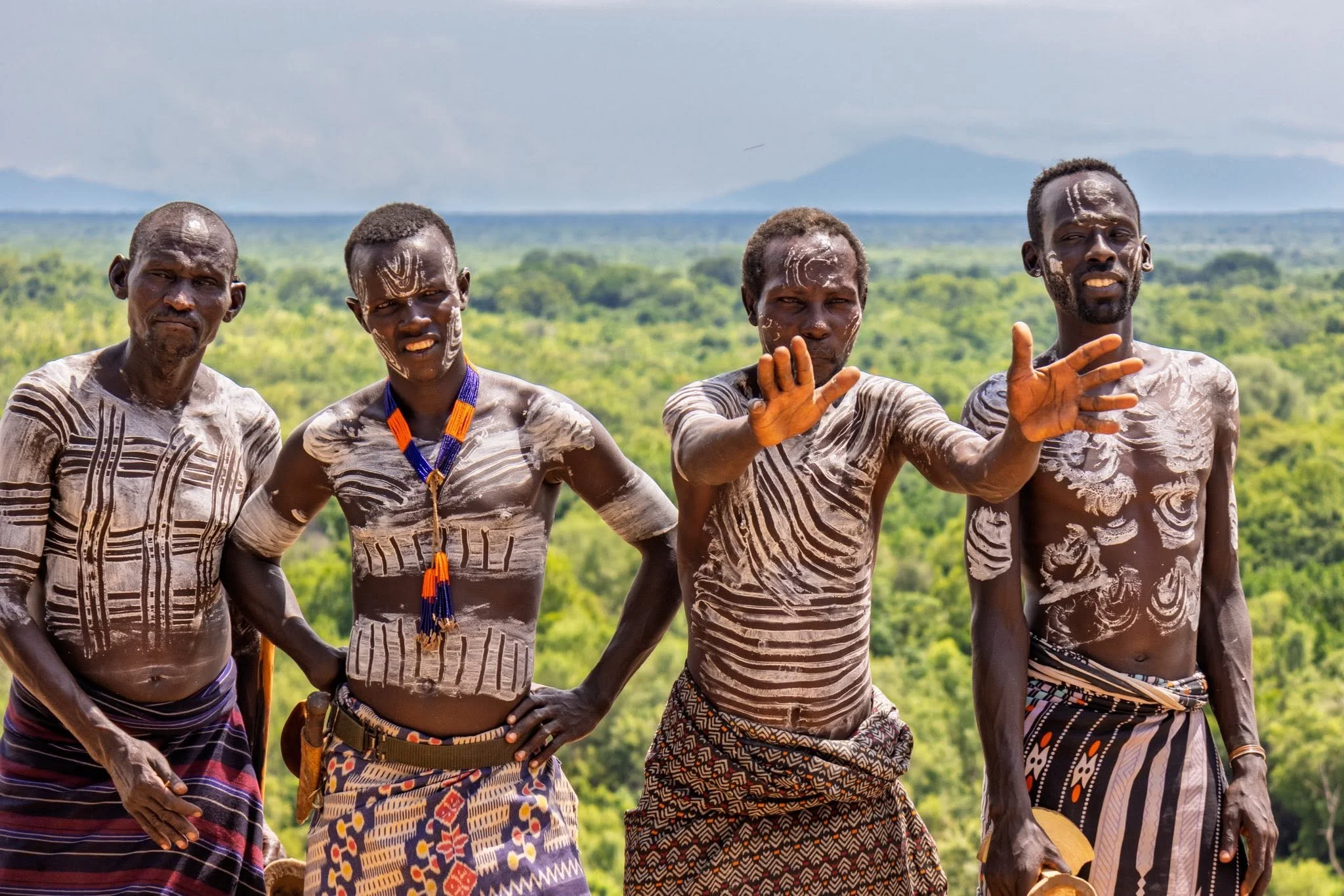
The tribal painting for the men in Karo.
6. The Iconic Frontier: Meeting the Mursi
Crossing into the rugged edges of Mago National Park brought us to the final, iconic encounter of our journey: the Mursi—the very faces that had captivated me in the darkroom all those years ago.
Identity & Lip Plates: Meeting Mursi women adorned with handcrafted clay lip plates (dhebi) and intricate body paint up close is deeply humbling. What outside lenses often reduce to "exotic curiosity" is, in reality, a deeply codified language of female maturity, marital pride, and bodily sovereignty. Many young women of the tribe are refusing to engage in these ancient practices so we may very well be some of the last people to see these practices for ourselves.
Navigating the Encounter with Children: Traveling through the Omo with kids requires empathy, patience, and intentional boundaries. Tourism here can risk feeling transactional if rushed. The key is traveling with a trusted, respectful local guide from the community, taking time to converse through translation, and engaging with warmth and mutual curiosity rather than treating people as mere photo subjects. We also were able to trade one of the bracelets we purchased from the Karo with a tribal leader’s bracelet - I was definitely the winner of that trade!
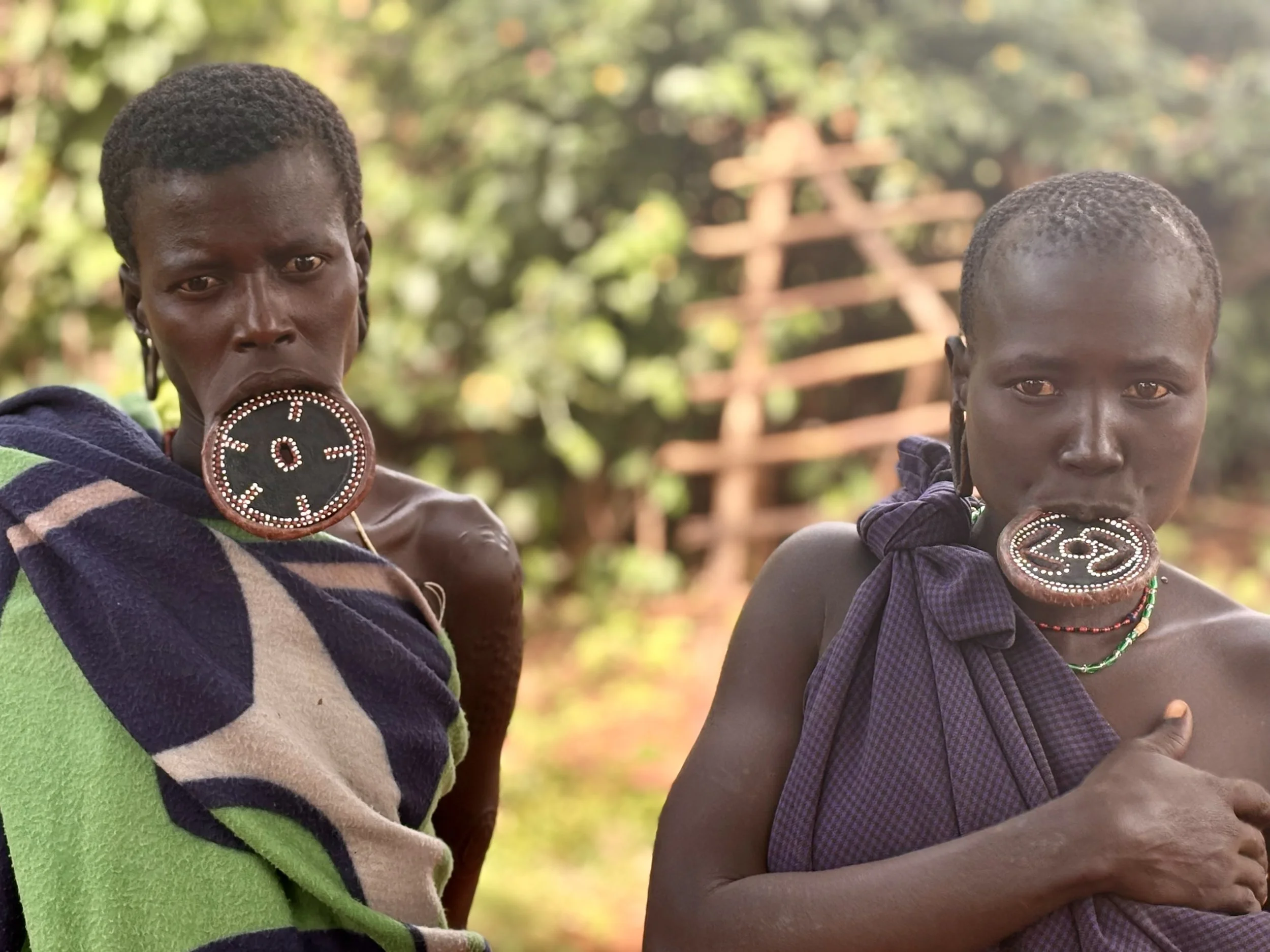
I wonder what these women think of us staring at their traditions…
The Modern Fusion Takeaway
Standing in the southern dust, watching the children share simple, silent moments of curiosity with village kids beneath the wide acacia sky, I thought back to the girl in high school holding 35mm film negatives.
Those photographs captured the visual drama, but they couldn't capture the warm wind rustling through the rift, the earthy scent of woodsmoke mingling with roasted coffee, or the profound human connection that happens when you step out of the 4WD not as a spectator, but as an open-hearted guest. Everyone we met was so generous to us and we are forever grateful.
Read more about the logistics here.
